

If your commercial roof is aging but hasn’t failed yet, chances are a contractor has mentioned roof coating as an option. But what is roof coating, exactly, and is it a real long-term fix or just a temporary patch? This guide breaks down how roof coatings work, the real roof coating benefits for commercial building owners, and how to know if your roof is a strong candidate.
What Is Roof Coating, Exactly?
The Basic Definition
Roof coating is a fluid-applied, seamless protective layer installed directly over an existing commercial roof — metal, single-ply, or built-up. Rather than tearing the old roof off, a coating system bonds to the surface and creates a new, monolithic waterproofing membrane. Think of it as a shield that adds years of service life to a roof that’s still structurally sound but showing its age.
Because there’s no demolition involved, coating is classified as maintenance rather than capital replacement in many cases — a distinction that matters for both budgeting and tax treatment. Always confirm the specifics with your accountant, but it’s one reason coating is popular with facility managers watching operating expense versus capital expense lines.
Common Types of Commercial Roof Coatings
• Silicone coatings — excellent UV resistance and ponding water tolerance; a strong choice for low-slope roofs in variable climates.
• Acrylic coatings — cost-effective and highly reflective; best suited to roofs with good drainage and moderate weather exposure.
• Polyurethane coatings — high impact and foot-traffic resistance; often used on roofs that see regular maintenance access.
• Elastomeric coatings — flexible, rubber-like membranes that expand and contract with the roof deck through temperature swings.
How Does Roof Coating Work?
The Application Process
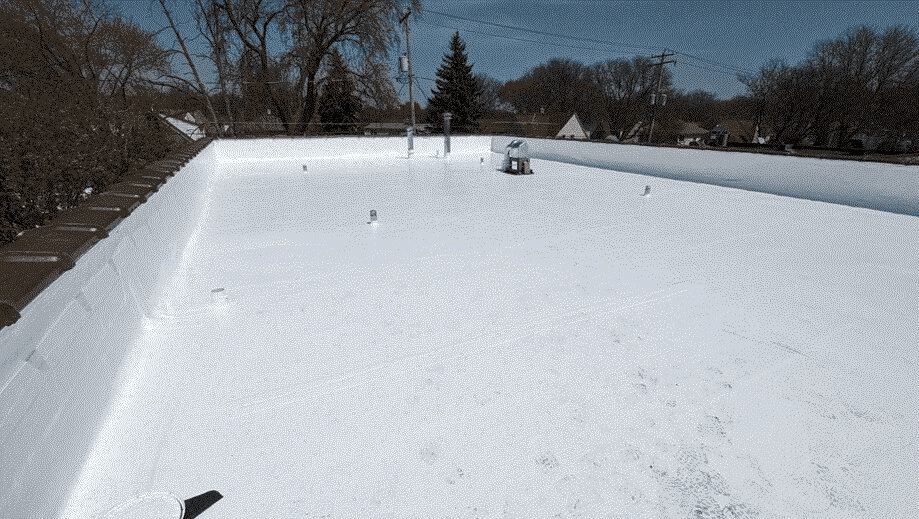
A professional roof coating project generally follows the same sequence:
• Inspection and cleaning — the roof is power-washed and inspected for rust, ponding, and deteriorated seams before anything is applied.
• Repairs first — loose fasteners, open seams, and soft spots are addressed so the coating isn’t sealing in existing problems.
• Primer application — on metal roofs especially, a rust-inhibitive primer is applied to stop active corrosion before it spreads.
• Coating application — one or two coats are applied by spray or roller, often reinforced with fabric at seams and penetrations.
• Cure and inspection — the coating cures into a seamless membrane, and a final walkthrough confirms full coverage and thickness.
How Coating Protects Your Roof
It helps to think of roof coating less like paint and more like a second roof skin. Paint sits on top of a surface and can crack or peel as the substrate moves; a properly applied coating system bonds to the roof and moves with it, which is why thickness and reinforcement at seams matter so much more than color or sheen.
Once cured, the coating does three things at once. It reflects UV radiation away from the roof surface, slowing the heat cycling that breaks down roofing materials over time. It forms a seamless waterproof barrier over fasteners, seams, and flashings — the exact spots where most commercial roofs start to leak. And because the membrane stays flexible, it moves with the roof deck through hot afternoons and cold nights instead of cracking under the stress.
Roof Coating Benefits for Commercial Building Owners
Extends Roof Lifespan
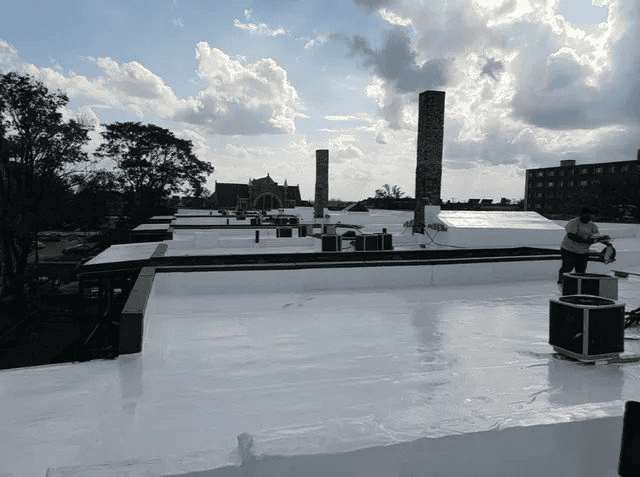
A well-installed, well-maintained coating system can add 10 to 15+ years of service life to an existing roof, especially when it’s reapplied on a maintenance cycle rather than left to wear down completely.
Lowers Energy Costs
Reflective coatings reduce how much heat the roof absorbs, which translates directly into lower cooling loads during warm months — a meaningful line-item savings for buildings with large flat or low-slope roof areas.
Minimal Disruption to Operations
Coating projects are typically measured in days, not the weeks a full tear-off and replacement can take. For warehouses, distribution centers, and manufacturing facilities where downtime is expensive, that difference alone can justify the approach.
Lower Cost Than Full Replacement
Because coating works with the existing roof assembly instead of removing it, material and labor costs are almost always a fraction of full replacement — often 20% to 50% less, depending on roof condition and size.
Sustainable and Lower-Waste
No tear-off means no truckloads of old roofing material heading to a landfill. For owners tracking sustainability goals, that’s a tangible benefit worth documenting.
The Cost of Waiting Too Long
Coating windows don’t stay open forever. A roof that qualifies today may not qualify in two or three years if surface rust is left untreated, seams continue to open, or ponding water starts soaking into the insulation below. Timing a coating project while the roof is still a strong candidate is almost always cheaper than waiting until restoration or full replacement is the only remaining option — which is why an annual or semi-annual inspection is worth the hour it takes.
You can see how this approach has played out on real commercial buildings in our project case studies, where roof coating and restoration were used to avoid full tear-offs on aging metal and flat roofs alike.
Is Roof Coating Right for Your Building?
Good Candidates for Roof Coating
Roofs with limited rust or surface wear, tight seams, dry interior insulation, and no significant structural sag are usually excellent coating candidates. If a roof still sounds solid when tapped and shows no active leaking, coating can often reset the clock affordably.
Age alone doesn’t disqualify a roof. Plenty of 15- and 20-year-old commercial roofs are still strong candidates for coating because they were built well and maintained on a regular schedule. What matters more than the calendar is the condition of the substrate underneath — which is exactly what an inspection is designed to reveal.
When Coating Isn’t Enough
Coating is a preventive and restorative solution — it isn’t a fix for roofs with deep corrosion, saturated insulation, or ongoing active leaks. If you’re already dealing with water intrusion, it’s worth understanding the common causes of commercial roof leaks before deciding on a repair path, and reading up on when a patch isn’t enough and full leak repair is needed.
Warning Signs It’s Time to Consider Roof Coating
Most owners first hear about coating from a contractor, but there are signs worth watching for on your own between inspections:
• Chalking, fading, or visible UV wear on the roof surface
• Minor rust spots on a metal roof that haven’t progressed to flaking or perforation
• Small areas of ponding water that drain within 48 hours
• Rising energy bills tied to cooling load in summer months
• A roof that’s approaching the end of its original warranty but still tests structurally sound
None of these are emergencies on their own, but together they’re a strong signal that a coating project now could prevent a much larger repair bill later.
Roof Coating vs. Other Roof Repair Options
Coating isn’t the only option on the table, and it isn’t always the right one. Here’s how it generally compares to the alternatives:
• Spot repair — addresses isolated leaks quickly and cheaply, but doesn’t extend the life of the roof as a whole or improve reflectivity.
• Roof coating — restores and protects a roof that’s still structurally sound; best value when applied before major deterioration sets in.
• Roof restoration — a more comprehensive system combining repairs, reinforcement, and coating for roofs with moderate wear across a large area.
• Full replacement — the right call once a roof has significant structural damage, widespread corrosion, or saturated insulation that coating can’t resolve.
The honest answer for most buildings falls somewhere between spot repair and full replacement — which is exactly the gap that roof coating and restoration are designed to fill.
What to Expect From a Professional Roof Coating Project
Every legitimate coating project starts with a thorough roof inspection to confirm the roof is a genuine candidate — not just a sales pitch. From there, a reputable contractor will walk you through substrate prep, product selection, expected coverage rates, and warranty terms before any work begins. Ask specifically about renewable warranties: many silicone and elastomeric systems can be re-coated at the end of their warranty term to extend protection further, rather than starting over with a full replacement.
At Seamless Building Systems, our commercial roofing and roof restoration teams evaluate every roof on its own merits — recommending coating when it’s the right call, and being upfront when it isn’t.
Frequently Asked Questions About Roof Coating
1. What is roof coating used for?
Roof coating is used to waterproof, reflect heat away from, and extend the life of an existing commercial roof without a full tear-off and replacement. It’s applied as a liquid that cures into a seamless, flexible membrane over metal, single-ply, or built-up roofing systems.
2. How long does a commercial roof coating last?
Most commercial roof coatings are warrantied for 10 to 20 years, and many systems — particularly silicone — can be re-coated at the end of that term to renew the warranty and extend the roof’s service life further, rather than requiring replacement.
3. How much does roof coating cost compared to a full roof replacement?
Roof coating typically costs 20% to 50% less than a full roof replacement because it works with the existing roof assembly instead of removing and rebuilding it. Exact pricing depends on roof size, condition, and the coating system selected.
4. Can roof coating stop an existing roof leak?
Roof coating can seal minor seam and fastener leaks as part of a full system application, but it is not a stand-alone fix for active, ongoing leaks caused by deeper damage. Roofs with significant corrosion, saturated insulation, or structural issues typically need targeted repair before — or instead of — coating.
5. Is roof coating the same thing as roof restoration?
Roof coating is one component of a broader roof restoration project. Restoration typically includes inspection, repairs, priming, and the coating application together as a complete system, while ‘coating’ often refers specifically to the final protective membrane layer.
6. How do I know if my commercial roof qualifies for coating?
A roof generally qualifies for coating if it has minimal structural damage, dry interior insulation, and rust or wear that’s surface-level rather than deep corrosion. The only reliable way to confirm eligibility is a professional roof inspection.
7. Does roof coating work on every type of commercial roof?
Roof coating works well on most metal, single-ply (TPO/EPDM), and built-up commercial roofs, but the right product depends on the substrate, slope, and existing condition. A roofing contractor should confirm compatibility during the inspection before recommending a specific coating system.
Ready to find out if roof coating is right for your building? Request a free estimate from the Seamless Building Systems team, or contact us to schedule a professional roof inspection.

