

A water stain on the ceiling tile, a drip near the loading dock, a damp patch on the warehouse floor — the first question every building owner asks is the same: why is my roof leaking? Commercial roofs rarely leak for just one reason, and the source of the water is often far from where it shows up inside the building. Below are the seven most common roof leak causes on commercial buildings, how to recognize each one, and what to do next.
Why Commercial Roof Leaks Are Rarely a Single Simple Problem
It’s rare for a commercial roof to fail all at once. More often, a leak is the end result of several small issues compounding over months or years — a seam that’s been slowly opening, a drain that’s been partially clogged, a flashing detail that was never quite sealed right after the last HVAC service call. By the time water shows up inside the building, the root cause has usually had time to establish itself.
Why Commercial Roof Leaks Are Hard to Diagnose
Unlike a residential roof, a commercial low-slope or metal roof has far more penetrations — HVAC curbs, vents, drains, skylights, conduit — and water can travel sideways along the deck before it ever drips through the ceiling below. That means the stain you see indoors might be 10, 20, or even 50 feet from the actual source. This is exactly why leak diagnosis is best left to a professional roof inspection rather than guesswork from the ground.
7 Common Causes of Commercial Roof Leaks
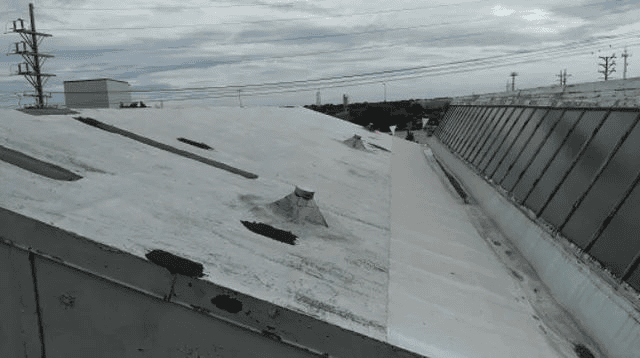
1. Deteriorated or Open Seams
Seams are where two sections of roofing membrane meet, and they’re one of the most common failure points on any commercial roof. Heat cycling, foot traffic, and age cause seam adhesive and sealant to break down over time, opening a direct path for water to enter.
2. Damaged or Missing Flashing
Flashing seals the transitions around roof edges, walls, curbs, and penetrations. When flashing pulls away, cracks, or was installed incorrectly in the first place, it becomes one of the highest-probability leak points on the entire roof — especially after high wind events.
3. Ponding Water
Low-slope commercial roofs are prone to ponding when drainage is inadequate or the roof deck has settled unevenly. Water that sits for more than 48 hours accelerates membrane breakdown and dramatically increases the odds of a leak developing at that exact spot.
4. Punctures and Physical Damage
HVAC service visits, storm debris, hail, and dropped tools can all puncture a roofing membrane. A puncture is often small enough to go unnoticed from the ground but large enough to let water through with every rain event.
5. Failed or Aging Roof Penetrations
Pipe boots, vent seals, and equipment curbs use rubber or sealant components that degrade faster than the surrounding roofing membrane. These small parts are a disproportionately common leak source simply because they wear out on a shorter timeline than the roof itself.
6. Clogged or Damaged Drains and Gutters
When drains, scuppers, or gutters are blocked by debris, water backs up and finds the path of least resistance — often through a seam, flashing detail, or roof penetration it wouldn’t have reached under normal drainage conditions.
7. Underlying Structural or Deck Issues
In older buildings, a leak can trace back to a deteriorated roof deck, corroded metal panels, or settling that’s opened gaps beneath the surface membrane. This is the most serious category on the list, since surface repairs alone won’t resolve a structural cause.
Seasonal Factors That Trigger Roof Leaks

The same roof can leak for different reasons depending on the time of year, which is part of why leak causes are so often misdiagnosed.
• Spring — heavy rain exposes drainage problems and seams that loosened over winter’s freeze-thaw cycles.
• Summer — intense heat accelerates UV breakdown of coatings and membranes, and sudden storms test ponding-prone areas.
• Fall — falling leaves and debris clog drains and gutters, causing water backup at the first heavy rain.
• Winter — ice damming, snow load, and freeze-thaw cycling stress seams, flashing, and penetrations that were already weakened.
Tracking when a leak first appeared — and whether it correlates with a specific storm, temperature swing, or maintenance visit — gives a roofing contractor a valuable head start on diagnosis.
How to Tell Which Cause Is Affecting Your Roof
A few practical clues can help narrow things down before a professional inspection confirms the source:
• Leak appears only during heavy rain — often pointing to ponding water or overwhelmed drainage.
• Leak appears after every rain, light or heavy — suggests an open seam, puncture, or failed penetration seal.
• Leak is near an HVAC unit, vent, or skylight — check flashing and penetration seals first.
• Leak location has moved over time — water may be traveling along the deck from a source elsewhere on the roof.
• Ceiling shows staining but no active drip — could indicate a slow leak that’s already saturating insulation above.
These clues are a helpful starting point, but they’re not a substitute for getting eyes on the roof — a surface-level view from inside the building can be misleading given how far water can travel before it shows itself.
What Happens If a Roof Leak Goes Unaddressed
Left alone, even a minor leak compounds quickly. Wet insulation loses its R-value and stops insulating effectively, wood and steel decking can rot or corrode, and mold growth becomes a real risk in humid climates. What starts as a small patch job can turn into a full roof leak repair project — or worse, trigger the need for a much larger section replacement — if it’s left unresolved through a full season of weather.
The True Cost of Ignoring a Roof Leak
It’s tempting to treat a small ceiling stain as a minor annoyance, especially if it’s not actively dripping. But roofing membranes don’t heal themselves, and every month a leak source goes unaddressed, the water spreads a little further into insulation, decking, and interior finishes. What would have been a same-day seam repair in month one can turn into a multi-day project replacing saturated insulation and damaged decking by month six — plus the cost of any inventory, equipment, or interior damage the water caused along the way.
Building owners who track roof issues as they appear — rather than waiting for a leak to become obvious — consistently spend less over the life of the roof than those who respond only after water is visibly coming through the ceiling.
When to Call a Professional
Any active leak affecting inventory, equipment, or electrical systems warrants an immediate call. For slower, intermittent leaks, scheduling a professional inspection at the first sign of staining is far cheaper than waiting for the problem to become obvious. A qualified roofing contractor can pinpoint the exact source, distinguish between a simple spot repair and a more involved fix, and advise whether a preventive option like roof coating makes sense once the immediate leak is resolved.
Frequently Asked Questions About Commercial Roof Leaks
1. Why is my roof leaking when it’s not raining?
A roof can appear to leak without active rain when condensation forms inside the building, when previously trapped water is slowly draining from saturated insulation, or when snow melt is running off gradually. These situations still warrant an inspection, since the underlying cause is often the same as a rain-triggered leak.
2. What is the most common cause of a commercial roof leak?
Deteriorated seams and damaged or failed flashing around roof penetrations are the two most common causes of commercial roof leaks. Both develop gradually through age, heat cycling, and weather exposure, which is why regular inspections catch them before they become active leaks.
3. Can a small roof leak cause serious damage?
Yes. A small, slow leak can saturate insulation, corrode metal decking, and encourage mold growth long before it becomes visible or noticeable as a drip inside the building. Addressing leaks early, even minor ones, prevents significantly more expensive repairs later.
4. How much does it cost to find and fix a commercial roof leak?
Cost depends on the cause and how far the damage has spread, but simple seam or flashing repairs are typically far less expensive than leaks caused by structural deck damage or widespread saturated insulation. A professional inspection is the only way to get an accurate estimate.
5. Should I patch a roof leak myself or call a professional?
DIY patching can offer short-term relief for a visible surface crack, but it often fails to address the actual source of the leak, which may be several feet away from where water is entering the building. A professional inspection and repair addresses the true cause rather than the symptom.
6. How often should a commercial roof be inspected to prevent leaks?
Most commercial roofs should be professionally inspected at least twice a year — typically in spring and fall — plus after any major storm, hail event, or high-wind occurrence. Regular inspections catch small issues like open seams or worn flashing before they turn into active leaks.
7. Can weather alone cause a roof leak, or is there always an underlying issue?
Severe weather like hail, high wind, or heavy snow load can cause a sudden leak on its own, but in most cases weather exposes or worsens an underlying issue — such as an aging seam, weakened flashing, or a drainage problem — that was already present before the storm.
Noticing signs of a leak? Don’t wait for it to get worse. Contact Seamless Building Systems to schedule a professional roof inspection, or request a free estimate for leak repair.

