If your commercial or industrial metal roof is leaking, you are not alone, and you probably do not need a full roof replacement. Most metal roof leaks start at fasteners, seams, flashing, and penetrations, not the panels themselves. The right fix depends on what is actually failing and how far the damage has spread. This guide walks you through the causes, how to find the real leak source, and how to choose between targeted repair, full restoration, or replacement.
Key Takeaways
- Most metal roof leaks start at details, not panels. Failed fasteners, open seams, deteriorated flashing, and aging sealant cause the vast majority of leaks on commercial metal roofs.
- Water travels before it drips. The stain on your ceiling is rarely directly below the leak source, which is why a proper inspection comes before any metal roof leak repair.
- Three paths forward. Building owners typically choose from targeted repairs for isolated issues, full metal roof restoration with a fluid-applied roof coating system for widespread but fixable problems, or roof recovery and replacement when panels or structure are too far gone.
- Restoration is not paint. A professionally applied restoration typically adds 10 to 20 years of service life and often costs about half or less than replacement.
- Seamless Building Systems (SBS) helps Milwaukee and Southeast Wisconsin property owners extend roof life through inspections, maintenance, repairs, and restoration, recommending a new roof only when it is truly needed.
Is Your Metal Roof Leak An Emergency Or A Maintenance Issue?
Active dripping near tenants, production lines, or electrical gear is an emergency; isolated stains or minor drips during a single storm can usually be handled as planned maintenance.
On commercial and industrial metal roofs across Southeast Wisconsin, leaks often show up first as ceiling tile stains after a winter thaw or following a wind-driven summer thunderstorm off Lake Michigan. A drip in an office corridor directly under a rooftop HVAC unit typically needs same-week attention. Rust-stained wall panels in a warehouse or water appearing at a window mullion during high winds may allow a more scheduled response, but still need investigation.
Property managers and facility managers should document where and when leaks occur. Photos, time of day, and weather conditions all help a roofer pinpoint the problem faster. SBS offers emergency roof repair for active leaks and planned repair and restoration projects for long-term control of metal roof leaks.
Where Do Commercial Metal Roofs Actually Leak?
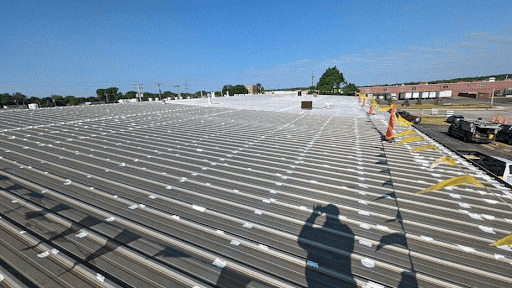
Structurally sound metal panels rarely leak through the flat field unless rusted through. Almost all metal roof leaks happen at joints, fasteners, laps, trim, and roof penetrations.
Common leak points on standing seam and through-fastened metal roofs include:
- Failed fasteners and worn washers
- Panel side laps and end laps where panels overlap
- Ridge caps, eave trim, and rake trim
- Skylights, vents, HVAC curbs, and pipe boots
Metal roofing screws cause most metal roof leaks on through-fastened systems. Exposed screws and their rubber washers age under UV and freeze-thaw cycles. Over time, fasteners can loosen due to temperature changes and roof movement, opening gaps that let water in.
Wisconsin-specific problems like ice buildup at eaves, snow sliding that stresses flashing, and repeated spring temperature swings flex metal roofing and open seams. Commercial roofs over purlins behave differently from metal roofs over solid decking. On purlin systems, water that gets past the panels can travel along framing members before appearing inside, sometimes many feet from the actual entry point.
What Causes A Metal Roof Leak In Southeast Wisconsin?
Metal roof leaks are usually a combination of aging components, thermal expansion, and weather exposure, not a single bad storm. Common causes of metal roof leaks include fastener corrosion, seam separation, and flashing failure.
Sealants around flashing can crack or separate, allowing water to penetrate. Capillary action can pull water into seams and overlaps, especially where panels overlap at low slopes or where sealant has hardened. Metal roofs need adequate drainage to prevent water from backing up beneath roof edges. Standing water or ponding water at blocked gutters pushes moisture into places it was never designed to go.
Design and improper installation problems often surface 10 to 20 years after the roof goes on. Insufficient slope, panels running at the wrong angle against the direction of water flow, and penetrations added later by HVAC contractors without proper roofing details all create future leaks that are hard to trace.
How Far Do Your Metal Panels Move, And Why Does It Matter?
Even a few tenths of an inch of movement, repeated thousands of times, can loosen fasteners and open seams in metal roofing.
Panel movement depends on panel length, metal type (steel versus aluminum), temperature range, and how panels are fastened. Standing seam metal roofs use sliding clips to absorb movement. Older through-fastened systems rely on screws driven through the panel into purlins or decking, essentially trying to lock the panel in place. When the panel moves anyway, those screws driven at a fixed point create elongated holes over time.
Thermal expansion and contraction can cause metal panels to bow or lift at seams. Repeated movement flattens or cracks rubber washers and eventually turns each loosened fastener into a recurring leak source. Prolonged exposure to moisture, salt, and chemicals around these stressed fastener holes accelerates rust and corrosion in metal roofing.
SBS inspections on older metal roofs in Milwaukee County often reveal a mix of tight and loose fasteners across the same roof. That pattern helps decide whether isolated repair or whole-roof restoration is the smarter investment.
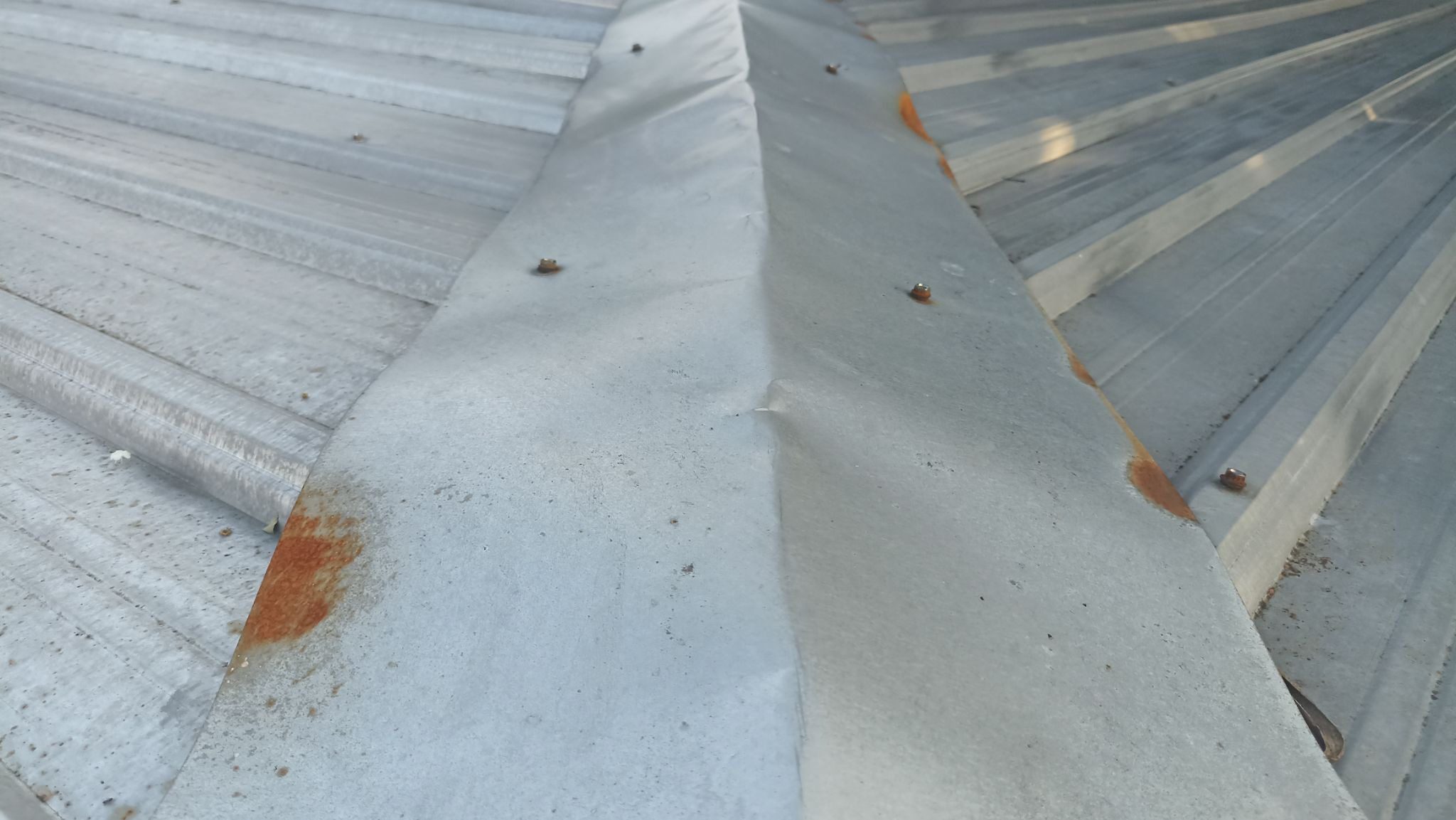
Common Failure Points: Fasteners, Seams, Flashing, And Rust
Most leaking metal roof issues fall into a few repeatable categories that an experienced roofer checks during every inspection.
Loose, damaged, or deteriorated screws are one of the most common causes of leaks in metal roofing systems. Screws can back out over time, causing leaks that worsen with each storm. Misaligned or overdriven screws crush washers on installation day; years later those washers crack, and the watertight seal is gone. When fastener holes enlarge from thermal cycling, simply re-tightening the same screw rarely holds.
Open side laps and end laps are another frequent problem. Failed butyl tape or dried sealant lets water migrate between panels. Separated trim laps at eaves and ridges let wind-driven rain push underneath.
Stack flashings last about half as long as metal roofs. Aging pipe boots split around vents and stacks. Sidewall and headwall flashing that no longer sheds water properly allows moisture to reach the substrate beneath. HVAC curbs with missing crickets or deteriorated sealant around HVAC units are common trouble spots on commercial buildings. Failed sealants must be updated regularly to prevent leaks at every one of these detail points.
Surface rust on metal panels can often be treated in place. But panels rusted completely through require replacement rather than coating. Simple caulk-only “repairs” are almost always temporary. Long-term metal roof leak repair depends on mechanical fastening, proper flashing, compatible roofing materials, and, when the pattern warrants it, a continuous restoration system.
Finding The Real Source Of A Metal Roof Leak
The drip inside the building is almost never directly under the hole. Water often travels along purlins, metal panels, or insulation before it shows up inside.
A professional inspection traces leaks methodically: interior walkthrough to map stains and drips, above-ceiling checks where accessible, then a roof walk focusing upslope from each symptom area. Inspect for leaks around penetrations like vents and chimneys, as these are high-probability entry points.
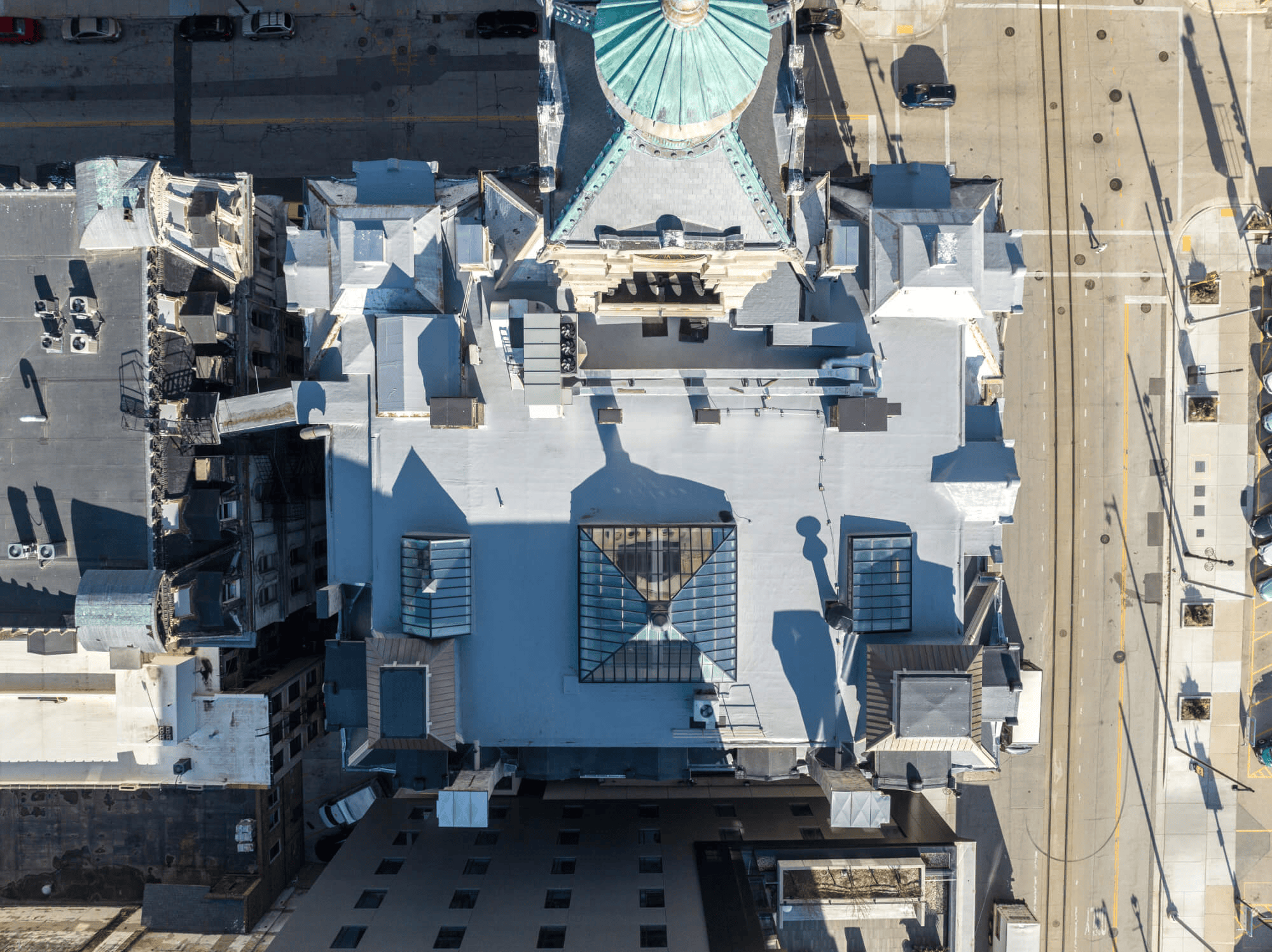
Building owners should avoid random patching. Start with a structured leak investigation, ideally as part of a free roof inspection and written condition report. SBS uses tools such as drone roof inspections on large or hard-to-access metal roofs to document conditions safely. Good leak diagnosis also includes checking roof edges, gutters, and wall transitions, since water can enter at these points and travel a long distance before appearing as interior damage.
Metal Roof Leak Symptoms, Causes, And Fixes
Use this table as a quick reference to match what you are seeing inside your building with likely causes and next steps. Then call SBS to confirm the leak source and get a proper repair plan.
| Symptom | Likely Cause | Typical Fix |
|---|---|---|
| Drip along a panel seam during wind-driven rain | Open side lap or failed sealant, wind forcing water into gaps | Reseal joints and flashing with high-quality silicone or polyurethane sealant; reinforce seam |
| Brown ceiling tile stains near rooftop HVAC units | Deteriorated curb flashing or missing cricket letting ponding water pool | Replace curb flashing, install cricket, seal curb perimeter |
| Rust streaks on interior columns below the eave | Rusted-through panel or corroded edge trim at eave | Replace rusted panel section with matching metal roofing material; rebuild eave flashing |
| Leaks only during heavy snowmelt or a January thaw | Ice dam backing water under eave trim, frozen gutters trapping moisture | Improve edge detail, clear gutters, consider restoration coating at vulnerable edges |
| Water around electrical conduit penetrations | Split pipe boot or missing seal around conduit | Replace pipe boot, seal penetration with compatible sealant |
| Drip appears far from any obvious roof feature | Water traveling along purlin or panel underside via capillary action | Trace path upslope, repair at actual entry point, consider whole-roof restoration if pattern is widespread |
Metal Roof Leak Repair Options: Patch, Restore, Or Recover?
Most leaking metal roofs do not need immediate roof replacement. They usually fall into one of three solution paths.
Targeted repairs (Tier 1): For isolated issues, replace failed fasteners with screws designed for metal roofing, rebuild specific seams and laps, install new pipe boots and curb flashings, and patch small holes using matching metal roofing material. Comprehensive repairs on metal roofs should use materials compatible with the existing system.
Metal roof restoration (Tier 2): When leaks are widespread but the metal panels are structurally sound, restoration covers the entire roof. This includes cleaning, rust treatment, fastener work, seam reinforcement, and a continuous fluid-applied metal roof coating across the whole roof surface. This is not paint. It is a full system built on the existing roof.
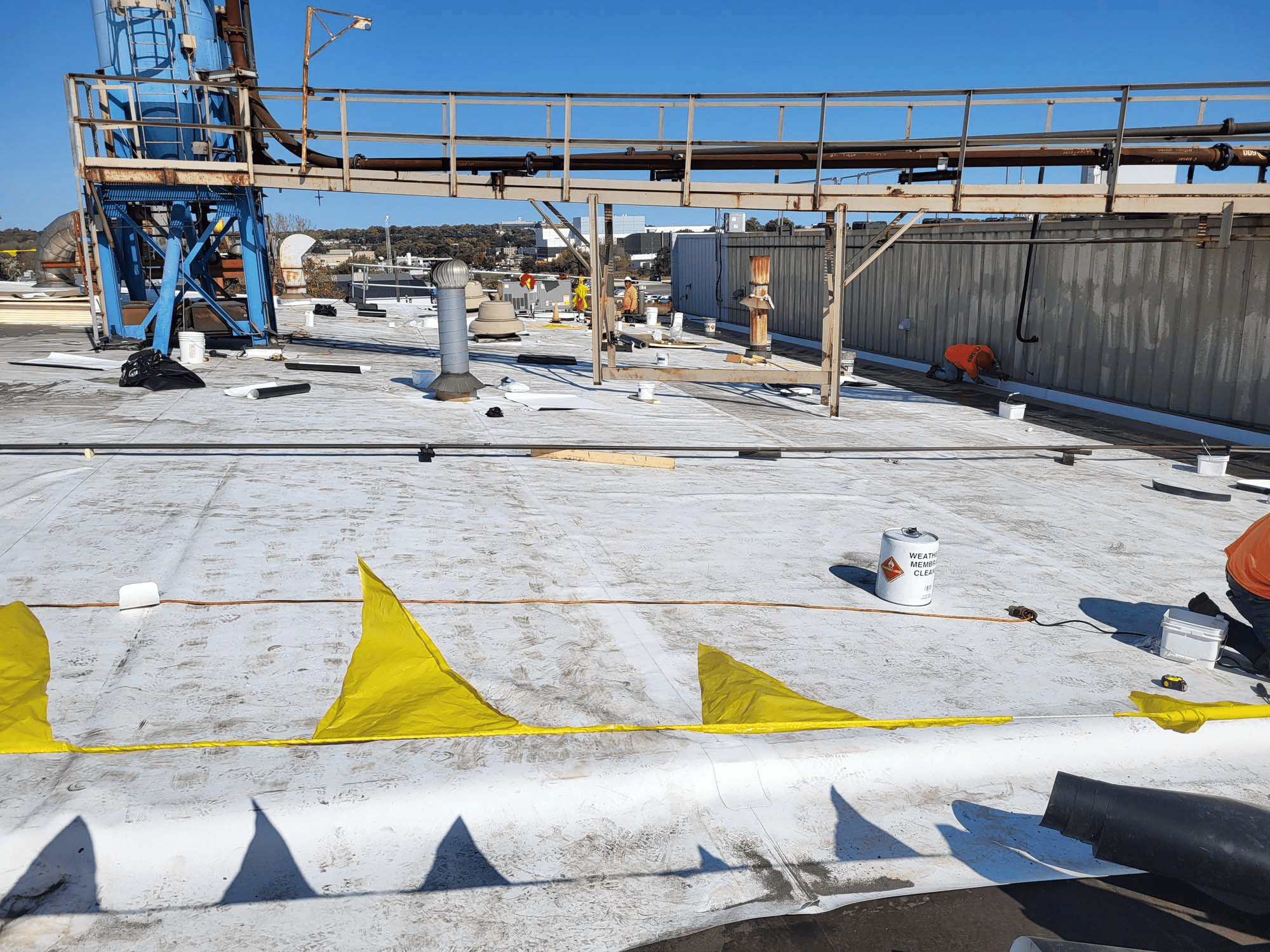
Roof recovery or replacement (Tier 3): When panels show extensive corrosion, structural damage is present, or prior repairs and coatings have repeatedly failed, a roof recovery (such as TPO over existing metal) or full tear-off and replacement is the responsible path. This is chosen only when repair and restoration are no longer viable.
If you are tired of chasing the same leaks season after season, read more about when spot repairs stop working.

Metal Roof Restoration And Metal Roof Coatings: When They Make Sense
Metal roof restoration is a full system: it repairs and prepares the roof, then installs a seamless, fluid-applied roof over the existing metal, with the roof coating as the top protective layer.
The typical restoration sequence SBS follows includes a detailed inspection, cleaning and rust treatment, fastener and seam work, primer where needed, and then application of a high-solids silicone or equivalent coating system. Silicone coatings typically last 10 to 20 years. PVDF coatings provide excellent resistance to weathering and are used on certain substrate types. Properly applied coatings can renew metal roofs and extend roof life by 10 to 20 years. Metal roof coatings can extend roof life by 10 years even at standard application thicknesses, and thicker applications push toward 20 years. Products like ArmorGarage Metal Roof Coating are rated to last 15 to 20 years under the right conditions.
For commercial and industrial owners, the business benefits matter. Restoration often costs a fraction of replacement, in many cases about half or less depending on roof condition. There is reduced tear-off disruption, less impact on tenants and production, and potential energy efficiency gains from reflective elastomeric coatings that reduce cooling loads.
In Wisconsin, the best coating application window is usually late spring through early fall. SBS can perform temporary repairs in adverse weather conditions during late fall or winter, then schedule a full restoration when weather allows proper adhesion and curing. G100 galvanized substrates last significantly longer than G60 substrates, so understanding the existing metal helps determine how much service life a coating can realistically add.
Signs Your Metal Roof May Not Qualify For Restoration
Not every leaking metal roof is a good candidate for restoration. Honest evaluation protects the building owner from wasting money.
Watch for these disqualifying signs:
- Large areas of metal panels rusted completely through (not just surface rust)
- Widespread soft spots or structural deflection in purlins or decking
- Chronic condensation problems inside the roof assembly that trap moisture
- Movement or physical damage from a compromised structure
- Extensive prior coatings peeling everywhere, or multiple poorly installed patch layers
- Major layout changes needed for new rooftop equipment
SBS will recommend a roof recovery or full replacement when the metal substrate or structure cannot reliably support a restoration. Sometimes the best plan is phased: stabilize leaks now, prioritize critical areas, and plan larger projects over several budget years.
Roof Recovery (Such As TPO Over Metal) Vs. Full Replacement
A roof recovery installs a new roof system, such as thermoplastic polyolefin (TPO), over the existing roof without a full tear-off. Replacement removes the old roof before installing a new one.
A TPO overlay over purlins or a wind-vented roof recovery makes sense when metal panels have too much corrosion for coating, but the framing is still structurally sound, or when owners want a single-ply system with modern warranties. Most flat roof systems like TPO, EPDM (rubber), and PVC in this region are designed to last 20 to 30 years with regular maintenance. Metal roofs can last 40 to 70 years with proper maintenance, so the right system depends on the building’s future.
For a deeper comparison, read about restoration vs. a TPO overlay on metal. SBS evaluates structure, insulation, drainage, and existing conditions before recommending any repair or replacement.
How To Prevent Future Leaks On A Metal Roof
Proactive maintenance and timely metal roof leak repair can extend roof life by 5 to 10 years or more, delaying major capital projects.
Practical steps include:
- Inspecting a metal roof at least twice a year can help prevent future leaks
- Clearing debris from gutters and valleys each season
- Checking and replacing aging fasteners and sealant at high-risk areas
- Watching HVAC curbs, wall transitions, and edge trim closely
Quality metal roofs require minimal upkeep compared to asphalt shingles, but “minimal” is not “none.” Metal roofs resist mold and mildew growth better than other materials, which helps, but fasteners, sealant, and flashing still age. In Southeast Wisconsin, check for new issues each spring after snow and ice stress, and each fall before freeze-up.
SBS offers roof repair and maintenance programs designed for exactly this kind of lifecycle planning. Documenting each inspection with photos and dates helps facility managers track patterns and supports warranty or insurance discussions.
Which Fix Fits Your Metal Roof: Repair, Restore, Or Replace?
The right fix depends on roof age, extent of leaks, condition of metal panels and structure, and the building owner’s budget and timeline.
A simple framework: if leaks are isolated and the majority of fasteners and seams are sound, targeted repair is usually enough. If leaks are widespread but panels are sound, restoration is often the best value per square foot. If panels or structure are badly deteriorated, roof repair or replacement is likely required. An SBS inspection samples specific roof areas, counts failed fasteners, and checks seams to give owners real data, not guesswork. Read more about when a patch is not enough.
Building owners and property managers should look at total cost of ownership, not just this year’s budget line. SBS can help phase work over multiple years when appropriate.
Schedule A Free Roof Inspection And Honest Assessment
Have Seamless Building Systems walk your metal roof, document conditions, and lay out clear options before the next Milwaukee storm season.
A free roof inspection from SBS includes an on-roof evaluation, photos of key conditions, identification of active and potential future leaks, and a written condition report. If you have an active leak, request emergency roof repair now and pair it with an inspection-based plan for longer-term work.
Schedule a free roof inspection and honest assessment
SBS serves Milwaukee, Brookfield, Waukesha, and surrounding Southeast Wisconsin counties.
Restore vs. Replace: Find Out If Your Roof Qualifies For A Roof Coating
Many aging metal roofs in Southeast Wisconsin qualify for restoration with a high-solids metal roof coating system, but some are too deteriorated and need a different solution.
The basic qualification checklist:
- Metal panels mostly solid, no widespread rust-through
- Structure sound and not deflecting
- No large-scale wet insulation issues
- No major design flaws that trap moisture or create standing water
High solids coatings build a thicker, more durable protective layer, which matters in extreme weather areas like Milwaukee with intense summer heat and UV, plus winter ice and snow loads.
Find out if your roof qualifies for a roof coating | Schedule a free roof inspection
SBS will also discuss alternative options like wind-vented roof recovery or TPO overlay if the inspection shows restoration is not the right long-term investment.

FAQs About Metal Roof Leak Repair For Commercial Buildings
How do I know if my leaking metal roof needs repair or full replacement?
Start with an inspection. If leaks are isolated and most panels, fasteners, and seams are performing, targeted repair is usually the right call. If leaks are widespread but panels are structurally sound, restoration with a roof coating system is typically the best value. Replacement is reserved for roofs with extensive rust-through, structural damage, or repeated coating failures.
Can a metal roof coating stop existing leaks, or does the roof need to be dry first?
A roof coating alone does not fix active leaks. All leak sources (failed fasteners, open seams, damaged flashing) must be repaired and the surface properly prepared before a coating system is applied. That preparation is what separates a restoration from just painting a roof.
What time of year is best for metal roof leak repair and restoration in Wisconsin?
Targeted repairs and emergency fixes can happen year-round. Full restoration coating work is best performed from late spring through early fall, when temperatures and humidity support proper adhesion and curing. SBS can stabilize active leaks during winter and schedule the full restoration for the next warm-weather window.
How long will a metal roof restoration last compared to a new roof?
A professionally applied restoration typically adds 10 to 20 years of service life. A new flat roof system (TPO, EPDM, PVC) is designed to last 20 to 30 years with regular maintenance. Restoration is often the smarter move when panels and structure are sound, since it costs roughly half or less of a full re-roof.
Will metal roof leak repair disrupt my tenants or production line?
Targeted repairs and restoration work are performed from the roof side and generally allow the building to remain in full operation. There is no tear-off, no crane lifts in most cases, and minimal noise compared to a full replacement. SBS coordinates scheduling to reduce impact on your business.
Does Seamless Building Systems work on residential metal roofs too?
Yes. While SBS primarily serves commercial and industrial buildings, the team also handles residential metal roof projects. Homeowners with a leaking metal roof in the Milwaukee and Southeast Wisconsin area can contact SBS for a free inspection.
How quickly can you respond to a leaking metal roof?
Response time depends on weather, access, and crew scheduling, but SBS prioritizes active leaks that threaten operations and interiors. Call (262) 354-0872 for active leaks. Use the contact form for planned inspections.
Do metal roof repairs or restoration affect my existing roof warranty?
Repairs and restoration can interact with manufacturer warranties. SBS reviews any active warranty documents before proposing a solution. SBS provides workmanship warranties on its own work and, where applicable, can arrange manufacturer warranties covering labor and materials on restoration or new systems at an additional cost on request.
Next Steps: Get Help With Your Leaking Metal Roof
A leaking metal roof on a commercial or industrial building in Southeast Wisconsin is almost always fixable with the right plan. Whether you need targeted metal roof leak repair, full metal roof restoration with a fluid-applied coating system, or roof repair and replacement when necessary, the first step is the same: get a clear picture of what is actually happening on your roof.
Request a free roof inspection to get started. If you have an active leak that needs urgent attention, call (262) 354-0872.
Want to see how SBS has helped other building owners? See our work.
Seamless Building Systems has 40+ years of combined experience helping local building owners extend the life of their metal roofs and avoid premature replacement.