
Most commercial roof leaks don’t start with a flood. They start with a faint stain on a ceiling tile, a musty smell in a back office, or a slow drip near the loading dock that nobody notices until inventory gets wet. A commercial roof leak inspection finds where that water is coming from, how far it has spread, and what else on the roof is likely to cause the next leak.
At Seamless Building Systems (SBS), the free inspection is where every project starts. This article walks through what our process looks like, what we typically find on commercial roofs across Milwaukee and Southeast Wisconsin, and what you get afterward, so you know exactly what to expect.
Key Takeaways
- A good commercial roof leak inspection looks at the whole roof system, not just the spot above the stain: membrane, seams, flashings, drains, rooftop equipment, and the interior.
- SBS uses drone roof inspections and moisture surveys, backed by a Certified Impedance Roof Moisture Surveyor on staff, to find water you cannot see from the surface.
- Most leaks trace back to a predictable list of problems: flashings, penetrations, seams, drainage, and damage from rooftop equipment work.
- You receive a detailed, transparent report with photos, prioritized findings, and honest recommendations, including when you do not need a new roof.
- Inspecting at least twice a year, plus after major storms, catches small problems before they become interior damage.
If Your Roof Is Leaking Right Now
If water is already coming into your building, call (262) 354-0872. While you wait, a few steps help protect your building and make the inspection more useful:
- Move computers, inventory, and equipment away from the leak.
- Put buckets under active drips and mark wet floors to prevent slips.
- Keep people away from water near light fixtures and electrical equipment.
- Photograph the damage with dates and times. This helps both the inspection and any insurance claim.
- Stay off the roof, especially during or after rain.
Keep in mind that the stain you see is rarely right under the leak. Water often travels along the roof deck or through insulation before it drips, so a stain in one corner of a room can come from a flashing well away from it. That’s why the inspection covers the whole roof.

How Our Commercial Roof Leak Inspection Works
Every SBS inspection combines three parts: a conversation about the roof history, an interior check, and a full roof-level inspection, with moisture testing where it is needed.
- Roof history. Before we go up, we ask about past leaks, earlier repairs, and any recent rooftop work such as HVAC installs, plumbing changes, or solar. Work by other trades is a common cause of new leaks.
- Interior inspection. We look at where water is showing up inside and how far it has spread.
- Roof-level inspection. We inspect the entire roof, not just the area above the stain, and document what we find with photos.
- Moisture assessment. Where needed, a moisture survey maps water trapped below the membrane, which shows how large a repair really needs to be.
Each inspection is matched to the roof type, whether that is TPO (thermoplastic polyolefin), EPDM (rubber), modified bitumen, built-up roofing, or metal, and to the roof’s age and history.
Interior Inspection: Tracing the Leak From the Inside
We start inside because that is where the evidence is. Common warning signs include:
- Stained, sagging, or crumbling ceiling tiles
- Peeling or bubbling paint on walls and soffits
- Rust on steel beams, joists, or fasteners
- Warped flooring or damaged finishes
- Musty odors that suggest moisture in hidden spaces
We measure where stains are located relative to walls and columns, then use those measurements to narrow down where to look on the roof above. Every interior leak location is photographed and noted so you can match our findings to tenant complaints and your maintenance records.

Roof-Level Inspection: What We Check
On the roof, we work systematically across the entire surface. Here is what we look at:
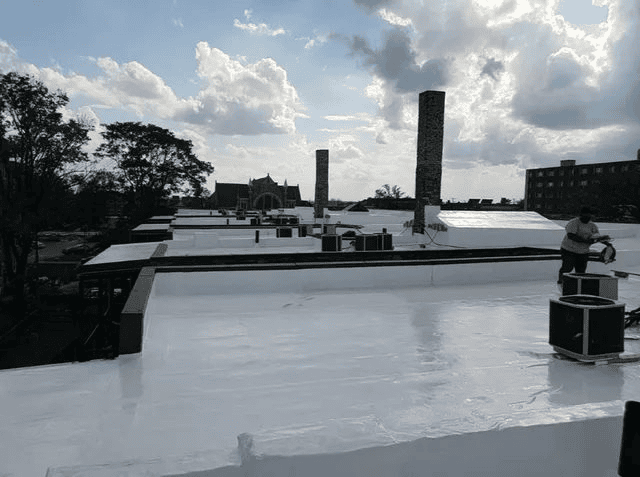
- Membrane condition. Punctures, blisters, open seams, shrinkage, cracking, and weathering. Punctures often come from foot traffic and dropped tools, so we pay close attention to service paths and areas around equipment.
- Flashings and edges. Every flashing at parapet walls, curbs, skylights, vents, and roof edges. These details are among the most common sources of commercial roof leaks.
- Drainage. Drains, scuppers, gutters, and downspouts, plus signs of ponding water (water that remains 48 hours or more after rain).
- Rooftop equipment. HVAC units, gas lines, conduit, and other penetrations, especially flashing and sealant at equipment curbs.
Finding the Water You Cannot See
Some of the most important findings are hidden below the membrane. Wet insulation doesn’t always show on the surface, but it matters a great deal: it tells you whether a roof can be repaired or restored, or whether sections need to be replaced.
- Drone roof inspections. Drones give us a full view of the roof, including ponding patterns, damage, and problem areas that are hard to see on foot, especially on large or hard-to-access roofs.
- Moisture surveys. SBS has a Certified Impedance Roof Moisture Surveyor on staff. A moisture survey maps where water has gotten into the roof layers and how far it has spread.
- Test cores. When we need to confirm what a survey shows, we may take a small core sample from the roof, only with your approval, and repair the spot right away.
This is what keeps recommendations honest. A roof with limited, localized moisture can often be repaired or restored. A roof with widespread wet insulation usually can’t, and the survey gives you the evidence either way.
Want to know what’s really happening on your roof? Schedule a free roof inspection and honest assessment.
Common Problems Our Leak Inspections Find
Most commercial roof leaks come from the same handful of issues, whether the building is a warehouse, an office, a school, or a multi-family property.
Membrane problems
- Punctures and cuts near service paths and equipment
- Open or failing seams on TPO and other single-ply roofs
- Split laps on aging modified bitumen
- Cracking and brittleness on older, weathered membranes
Flashing problems
- Loose or pulled-away flashing at parapet walls and roof edges
- Cracked or deteriorated flashing around pipes, vents, and curbs
- Dried-out sealant at penetrations
- Poorly sealed pitch pans around conduit
Drainage problems
- Ponding water in low spots
- Clogged drains and scuppers, especially after fall leaves
- Ice and frozen drains that trap snowmelt in late winter
Rooftop equipment problems
- HVAC condensate lines draining directly onto the roof
- Missing walkway pads around equipment that gets regular service
- New penetrations added by other trades without proper flashing
In Southeast Wisconsin, freeze-thaw cycles add another layer. Small gaps at seams and flashings open a little more each winter, which is why many leaks show up in spring.

What You Receive After an SBS Roof Leak Inspection
Our goal is to give you a clear picture and a plan, not just a list of problems. After the inspection, you receive a detailed, transparent report that includes:
- Photos of each finding, with a plain-language description of the problem and what it could lead to if left alone
- Findings grouped by priority: what needs attention now, what should be handled soon, and what to plan for over the next few years
- Our honest recommendation: repair, restoration, replacement, or a phased plan that fits your budget cycle
- Notes on whether your roof may qualify for restoration, if that is an option worth considering
An inspection assesses the roof’s condition. When you’re ready to price the work, we provide a separate free estimate based on what the inspection found.
We’re also upfront about what you don’t need. SBS was founded in 2015 to stop premature roof replacements, so if a repair or restoration will solve the problem, that is what we will recommend.
How Often Should a Commercial Roof Be Inspected?
The National Roofing Contractors Association (NRCA) recommends inspecting commercial roofs at least twice a year, typically in spring and fall, and after major storms. SBS is an NRCA member, and that schedule matches what we see in Wisconsin:
- Spring: see what winter did. Freeze-thaw cycles, ice, and heavy snow loads leave damage that is easy to miss.
- Fall: button up before winter. Clear drains, seal small gaps, and fix minor problems before snow and ice arrive.
- After storms: check for wind, hail, and debris damage, and document it quickly if an insurance claim is possible.
- After rooftop work: inspect after HVAC, plumbing, or other trade work, since new penetrations are a common source of leaks.
A maintenance program puts this on a predictable schedule. Proactive maintenance and timely repairs can extend roof life by 5 to 10 years or more, and they help you avoid the emergency calls and interior damage that come from surprise leaks.
What an Inspection Means for Your Roofing Budget
A good inspection is really a budgeting tool. Accurate leak detection lets you fix what’s actually wrong instead of guessing, and that often adds years to an aging roof and pushes a major capital expense further out.
- When the roof can be repaired, you avoid paying for work you do not need.
- When the roof qualifies for restoration, you can extend its life at a fraction of the cost of replacement. A professionally applied restoration typically adds 10 to 20 years of service life.
- When the roof does need replacement, you have documented evidence to support the capital request, and time to plan it.
Dry insulation also matters for operating costs. Wet insulation loses its insulating value, so finding and fixing moisture early helps keep heating and cooling performance where it should be.
Does your roof qualify for restoration? Find out with a free roof inspection, or browse our case studies to see what other building owners in Milwaukee and Waukesha have done.
FAQ: Commercial Roof Leak Inspections
What does a commercial roof leak inspection include?
A commercial roof leak inspection includes a review of the roof history, an interior check of where water is showing up, a full inspection of the roof surface and details, and moisture testing where needed. You receive a detailed report with photos, priorities, and recommendations.
Is the roof inspection really free?
Yes. SBS offers free roof inspections and assessments. If you decide to move forward with work, we provide a separate free estimate based on what the inspection found.
How long does a commercial roof leak inspection take?
It depends on the size and complexity of the roof and whether moisture testing is needed. We’ll give you a time estimate when we schedule, and we coordinate with you so the inspection doesn’t disrupt tenants or operations.
Do you have to cut into the roof to find a leak?
Usually not. Most leaks can be located through a visual inspection, drone inspection, and moisture survey. A small test core is taken only when we need to confirm conditions below the membrane, only with your approval, and it is repaired right away.
Will the inspection fix my roof leak?
No, the inspection is for diagnosis. Roof leak repair is a separate step. If you have an active leak, we’ll talk with you about stopping the immediate problem while you review your longer-term options.
Can an inspection help with an insurance claim?
Yes, it can help. Photos, moisture survey results, and a documented timeline help show storm-related damage. SBS offers storm damage assessment and insurance claim assistance, and it is best to schedule an inspection soon after a storm while conditions are fresh.
Should my maintenance staff inspect the roof themselves?
Staff should not walk commercial roofs without proper training and fall protection. They can help by logging interior leaks, photographing stains, and noting from a safe spot whether drains look blocked. That information is useful when our team arrives.
How often should I schedule a commercial roof inspection?
At least twice a year, in spring and fall, plus after major storms and any rooftop work. A maintenance program keeps those inspections on a regular schedule.
Find Out What’s Behind Your Roof Leak
The sooner a leak is found, the more options you have. Schedule a free roof inspection and honest assessment with Seamless Building Systems, and we’ll show you what we find and what your roof really needs.