Stop a Roof Leak Without a Full Roof Replacement
Water is staining ceiling tiles or dripping near equipment, and the first thought for a lot of building owners is that the roof is done. Usually, it isn’t. In many cases, you can stop a roof leak without replacement by finding the true source, repairing it properly, and, if the roof qualifies, restoring it with a seamless coating system. This guide explains how to tell which path fits your building, how roof leak repair compares to roof coating, and when a new roof really is the right call.
Seamless Building Systems (SBS) was founded in 2015 to challenge unnecessary roof replacements, and that’s still how we work with building owners across Milwaukee and Southeast Wisconsin: repair when possible, restore when the roof qualifies, and replace only when it’s truly necessary.
Key Takeaways
- Most commercial roof leaks start at specific details like seams, flashings, penetrations, and drains, so many can be stopped with targeted repair instead of a new roof.
- A roof coating is not a leak patch. It is the top layer of a full restoration system: inspection, repairs, surface prep, coating, and ongoing maintenance.
- A professionally applied restoration typically adds 10 to 20 years of service life and often costs a fraction of replacement, depending on roof condition.
- Not every roof qualifies. Widespread wet insulation or a damaged deck usually points to replacement, and an honest assessment should tell you that.
- A free roof inspection with a detailed report is the best first step before you commit to repair, restoration, or replacement.
Roof Leak vs. Roof Coating: Your Three Options
When a commercial roof leaks, you have three basic ways to respond. Each one is the right answer in the right situation.
- Targeted roof leak repair. A roofer fixes the specific failure: an open seam, a failed flashing, a cracked sealant joint around a vent. It’s the fastest and least expensive option up front, and if the rest of the roof is in good shape, it may be all you need. The risk is fixing today’s drip while a larger problem keeps developing elsewhere on the roof.
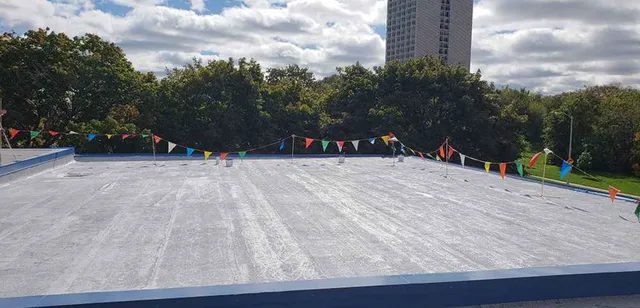
- Roof restoration with a coating system. The roof is inspected, repaired at every trouble spot, cleaned and prepped, then covered with a seamless, fluid-applied coating. Restoration works with the roof you already have instead of tearing it off. A professionally applied restoration typically adds 10 to 20 years of service life, and most buildings stay open during the work.
- Full roof replacement. The existing roof comes off, and a new system goes on. It’s the largest investment and the most disruptive option, but it’s the right answer when the roof has failed broadly, or the deck is damaged. Most flat roof systems (TPO, EPDM, PVC) in this region are designed to last 20 to 30 years with regular maintenance.
The right choice depends on the condition of your roof, not on what a contractor would prefer to sell. That’s why an inspection should come before any recommendation.

How to Tell If You Can Stop a Roof Leak Without Replacement
Many leaks are localized, even when the damage inside looks serious. Your roof is likely a candidate for repair or restoration if:
- The membrane is generally intact across most of the roof, with problems concentrated at specific details.
- Leaks show up around penetrations (HVAC curbs, vents, skylights), seams, flashings, or drains rather than randomly across the open roof.
- A moisture survey shows the insulation is mostly dry, with wet areas that are limited and replaceable.
- The roof deck is solid, with no sagging, rot, or significant corrosion.
- The roof still has useful life left and hasn’t failed across large sections.
You can’t judge most of this from a ceiling stain. Water often travels along the deck or through insulation before it drips, so the leak on the roof can be some distance from the spot you see inside. SBS uses drone roof inspections to see the whole roof, and we have a Certified Impedance Roof Moisture Surveyor on staff to map where water has actually gone.
Not sure where your roof stands? Schedule a free roof inspection and honest assessment. You’ll get a detailed, transparent report on what we find, including whether repair or restoration makes sense for your building.
Finding the Source of a Leak on a Flat or Metal Roof
On low-slope (flat) roofs and metal roofs, leaks tend to follow predictable paths:
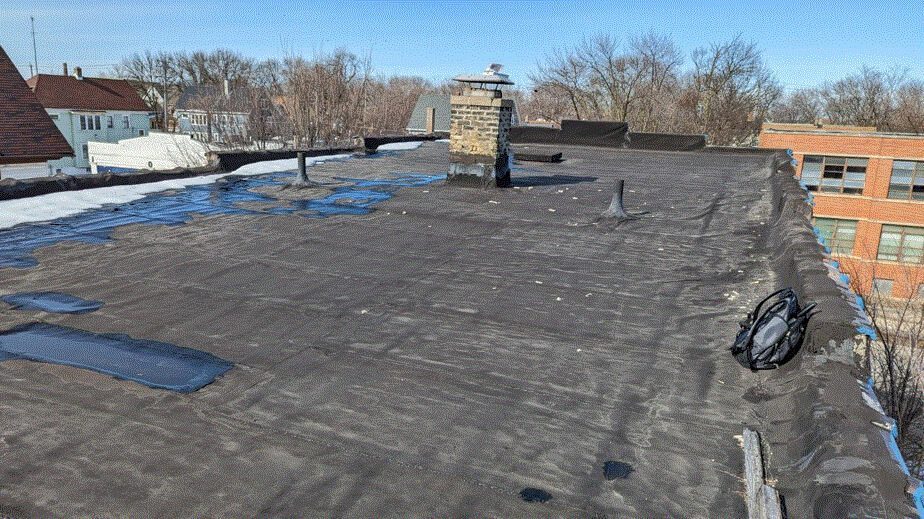
- Flat roofs most often leak through open seams, cracked or blistered membrane, failed flashings at walls and curbs, and areas where water ponds after a rain.
- Metal roofs usually leak at fasteners, loose lap seams, rusted panels, and sealant joints around penetrations. Water can run along panel ribs and fastener lines before it finds a way inside.
Before a roofer arrives, a facility manager can safely help by:
- Noting exactly where water appears inside and whether it drips during rain or hours later.
- Photographing stains and damage, with dates, for your records and any insurance claim.
- Checking from a safe vantage point whether drains look blocked or water is standing on the roof.
- Staying off wet or unfamiliar roof surfaces and leaving rooftop work to professionals.
In Southeast Wisconsin, the season matters too. Freeze-thaw cycles slowly open small gaps at seams and flashings over the winter, and snowmelt combined with frozen drains can leave water sitting on a roof for days. A leak that shows up in March often started months earlier.
Common Leak Causes, and When a Coating Can Help
The cause of a leak decides the fix. Here’s how common problems line up with your options:
- Open or failing seams. Usually repairable. If seams are failing across the whole roof, a restoration reinforces and seals them as part of the system.
- Flashing and penetration failures. Repair comes first. In a restoration, these details are reinforced before any coating goes on.
- Ponding water. A coating doesn’t fix drainage, but silicone coatings tolerate ponding better than most other coatings, which is one reason silicone is SBS’s coating of choice on many low-slope roofs. Drainage problems should still be corrected where possible.
- Blistering or alligatoring on older built-up and modified bitumen roofs. These surfaces are often restorable once damaged areas are repaired and the roof is properly prepped.
- Rust, loose fasteners, and open laps on metal roofs. Restoration typically treats rust, secures or replaces fasteners, seals laps, and then covers the roof in a seamless coating.
- Old, peeling coatings. A previously coated roof may still be restorable if the failed material is removed and the new coating is compatible with what’s underneath.
When a coating is not the answer: if insulation is wet across large areas of the roof, the deck is damaged or deflecting, or the membrane has failed across broad sections, coating over it only hides the problem. Those roofs need replacement, and we’ll tell you so.
What Roof Coating Is (and What It Isn’t)
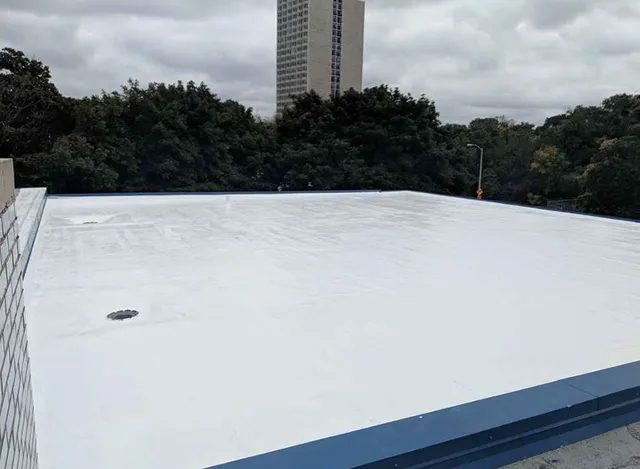
A roof coating is a fluid-applied (also called liquid-applied) material that cures into a continuous, seamless membrane over your existing roof. Most roofing membranes are made in a factory and rolled out in sheets, with seams that have to be welded or glued. A coating system is built by hand on-site, custom-fit to your building, with no seams to fail.
It’s just as important to understand what a coating is not. It isn’t paint, and it isn’t a quick spray-on fix. At SBS, the coating is the top layer of a full restoration system:
- Inspection to confirm the roof qualifies.
- Repairs to seams, flashings, penetrations, and any wet or damaged areas.
- Surface preparation, including cleaning and priming where needed.
- Coating application, built up to the thickness the system requires.
- Ongoing maintenance so the restored roof keeps performing.
A patch fixes one spot. A restoration addresses the whole roof surface, which is why it can extend roof life instead of just stopping one leak.
Roof Coating vs. Roof Replacement: Pros and Cons
Restoration advantages
- Restoration often costs a fraction of replacement, in many cases about half or less, depending on roof condition. Typically adds 10 to 20 years of service life.
- Less disruption: no tear-off, less noise, and most buildings keep operating.
- Keeps old roofing material out of landfills.
- Defers a major capital expense so you can plan instead of react.
Restoration limitations
- The roof has to qualify. Coatings can’t fix saturated insulation or a damaged deck.
- Coatings don’t correct poor slope or undersized drains on their own.
- The roof still needs periodic inspections and maintenance.
- Coating chemistry affects future work. For example, once a roof is coated with silicone, future recoats generally need to be silicone as well.
Replacement advantages
- A completely new roof assembly, from the deck up.
- A chance to add insulation, improve slope and drainage, and address code requirements.
- Hidden damage is fully exposed and corrected.
Replacement drawbacks
- The highest up-front cost of the three options.
- Longer project timelines and more disruption to operations and tenants.
- More waste sent to landfills.
Commercial budgets don’t always line up with a roof’s needs. A phased plan is often a smart middle ground: targeted repairs now, then restoration or replacement in a later fiscal year once it’s budgeted.
Choosing the Right Coating for Your Roof
There’s no single best coating. The right choice depends on your roof type, slope, drainage, and goals. The most common options are:
- Silicone. Holds up well to ponding water and UV exposure, which makes it a strong fit for many low-slope roofs. Silicone can collect dirt over time, and future recoats generally need to be silicone.
- Acrylic. Water-based and reflective, and a good fit for well-drained roofs, including many metal roofs. Acrylic isn’t a good choice where water ponds.
- Polyurethane (urethane). Tough and impact-resistant, often used where foot traffic or hail is a concern, sometimes as a base layer under another product.
SBS is a certified installer for Gaco and Sherwin-Williams coatings and part of the Uniflex Authorized Contractor Network. We recommend the system that fits your roof rather than pushing a single product.
When You Really Do Need a New Roof
Restoration is a great option for the right roof, but not for every roof. Replacement is usually the better path when:
- A moisture survey shows widespread saturated insulation.
- The deck shows rot, corrosion, or deflection.
- There are multiple layers of failing roofing that a new system can’t reliably bond to.
- The membrane has failed across large sections of the roof.
- You need code-required insulation or drainage upgrades that a coating can’t provide.
When replacement is the right call, SBS does it right the first time. We install TPO (thermoplastic polyolefin), EPDM (rubber), and modified bitumen systems as a certified installer for manufacturers including IKO, GenFlex, and Mule-Hide. In some cases, a roof recovery (a new system installed over the existing roof without a full tear-off) is another option worth considering.

How SBS Stops a Roof Leak With Restoration
- Free roof inspection. We walk the roof, use drone roof inspections where they help, review the leak history with you, and document conditions with photos.
- Moisture assessment. Moisture surveys, plus test cores where needed, show where water is and how far it has spread. This is how we determine whether your roof qualifies for restoration.
- Detailed report and options. You get a transparent report with what we found and our honest recommendation: repair, restoration, replacement, or a phased plan. When you’re ready to price a project, we provide a free estimate.
- Repairs and prep. Seams, fasteners, flashings, and penetrations are repaired, wet areas are replaced, and the surface is cleaned and primed.
- Coating application. The coating is applied on-site to the thickness the system requires, during the right weather window. In Wisconsin, that window is typically late spring through early fall.
- Warranty and follow-up. SBS provides a workmanship warranty, and manufacturer warranties covering labor and material are available at an additional cost. We stay with you afterward through inspections and maintenance, including spring check-ins to see what winter did and fall visits to button up before winter.
Does your roof qualify for restoration? Find out with a free roof inspection. If you have an active leak right now, call (262) 354-0872.
What It Costs: Think in Total Cost of Ownership
Roof size, system, condition, and access all affect price, so the only reliable number is one based on your roof. What we can say is how the costs compare:
- Restoration often costs a fraction of replacement, in many cases about half or less, depending on roof condition.
- Extending roof life defers a major capital expense and gives you time to budget.
- Skipping a tear-off avoids disposal costs and reduces downtime for tenants and operations.
- A restored roof on a maintenance plan means fewer emergency calls and less interior damage from surprise leaks.
For a number specific to your building, request a free estimate. Want to see the work first? Browse our case studies from projects in Milwaukee and Waukesha.

FAQ: Stopping a Roof Leak Without Replacement
Can I stop a roof leak without replacing the roof?
Yes, in many cases. Most commercial roof leaks start at specific details like seams, flashings, and penetrations, and those can be repaired. If the roof is aging but still sound, a restoration with a seamless coating can extend its life further. An inspection tells you which applies to your building.
Will a roof coating stop my existing leak?
A coating stops a leak only after the source has been found and repaired. Coatings aren’t designed to fix wet insulation or open seams on their own. In a proper restoration, repairs come first, and the coating then seals and protects the whole roof.
Roof leak vs. roof coating: which should I deal with first?
Deal with the leak first. Find and repair the source, then decide whether the rest of the roof would benefit from restoration. Coating over an unrepaired leak traps the problem instead of solving it.
How long does a roof coating last?
A professionally applied restoration typically adds 10 to 20 years of service life. Actual performance depends on the coating, how thick it is applied, the condition of the roof underneath, and regular maintenance. Warranty length also depends on coating thickness.
Can a coating go over an old coating that is peeling?
Sometimes, but only with the right prep. Loose or peeling material has to be removed first, and the new coating has to be compatible with the old one. For example, silicone generally bonds to existing silicone, while most other coatings will not bond to silicone without special preparation. Adhesion testing during the inspection answers this.
Will a coating affect my existing roof warranty?
It can, depending on the manufacturer and the warranty terms. Review your current warranty before any coating work. SBS offers warranty management and can help you understand how a restoration may affect your coverage.
Which roofs don’t qualify for a coating?
Roofs with widespread wet insulation, a damaged or deflecting deck, broad membrane failure, or several failing layers usually do not qualify. Steep-slope asphalt shingle roofs are also better served by repair or replacement than by a coating.
Will my building need to close during the work?
Usually not. Restoration involves no tear-off, so it’s quieter and less disruptive than replacement, and most buildings keep operating. We coordinate scheduling around your tenants and operations.
What should I do if my roof is leaking right now?
Call (262) 354-0872. Protect equipment and inventory under the leak, photograph the damage, and stay off the roof. We will help you stop the immediate problem and then assess the roof so you can make a long-term decision without pressure.
How often should a coated roof be inspected?
At least twice a year, typically in spring and fall, plus after major storms. Regular inspections keep the roof performing and help protect your warranty, and proactive maintenance with timely repairs can extend roof life by 5 to 10 years or more.
Find Out What Your Roof Really Needs
A leak doesn’t have to mean a new roof. Schedule a free roof inspection and honest assessment with Seamless Building Systems, and we’ll tell you what your roof needs and what it doesn’t.