
Flat Roof Leak Repair: Diagnosing and Fixing Ponding Water
Standing water after a storm is one of the most common things building owners notice on a flat roof, and it’s often connected to the leak that keeps coming back. Ponding doesn’t always cause a leak right away, but over time it puts steady stress on seams, flashings, and the membrane itself. Good flat roof leak repair fixes the leak and the reason water is sitting there in the first place. This guide explains how to diagnose a roof ponding water leak, how repairs differ by roof type, and how to keep the water from returning.
Seamless Building Systems (SBS) repairs and maintains commercial flat roofs across Milwaukee and Southeast Wisconsin. Our approach is the same on every roof: find the real cause, fix what needs fixing, and recommend replacement only when it’s truly necessary.
Key Takeaways
- Flat roof leaks most often start at seams, flashings, penetrations, and drains, not in the open field of the membrane.
- Water that stays on a roof 48 hours or more after rain is considered ponding, and it usually points to a slope or drainage issue that sealant alone won’t solve.
- The right repair depends on the roof material. Using an incompatible product can make the damage worse.
- Lasting flat roof leak repair addresses both the damaged area and the drainage problem behind it.
- A free roof inspection with a detailed report shows where water is getting in and what it will take to fix it.
What Counts as Ponding Water on a Flat Roof?
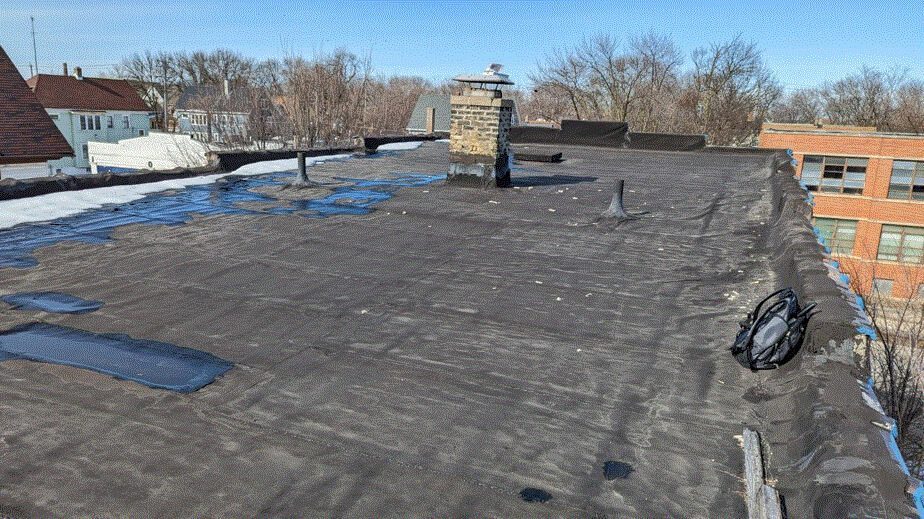
The roofing industry generally defines ponding as water that remains on a roof 48 hours or more after rain, under conditions that would normally allow it to dry. A few puddles that disappear by the next day are normal on a low-slope roof. Water that sits for days, or collects in the same spots after every storm, is worth a closer look.
Weight is one reason it matters. Water weighs about 5.2 pounds per square foot for every inch of depth, so a two-inch pond covering 1,000 square feet adds more than 10,000 pounds to the roof structure. Over time, that load can make a low spot deeper, which then holds even more water.
Why Ponding Water Leads to Flat Roof Leaks
Flat roofs aren’t truly flat. They rely on a slight slope and well-placed drains to move water off. When water stays put instead, several things happen:
- Constant pressure on weak points. Water that would normally run off in minutes sits against seams, flashings, and penetrations for days, finding any small gap.
- Faster aging of the membrane. Repeated wet and dry cycles, debris that settles in ponded areas, and UV exposure all wear the roof surface faster where water collects.
- Winter damage. In Southeast Wisconsin, ponded water freezes and thaws repeatedly. Ice can work seams open, and frozen drains during snowmelt can leave water sitting on a roof far longer than usual.
- Leaks near rooftop equipment. Ponding around HVAC units, vents, and parapet walls is especially likely to cause leaks because those details are the most complex parts of the roof.
Inside the building, signs of a roof ponding water leak include ceiling stains that grow after storms, drips near light fixtures, sagging ceiling tiles, and musty odors in rooms below the roof.
Common Causes of Ponding Water
- Not enough slope. Most building codes call for new low-slope membrane roofs to have at least 1/4 inch of slope per foot toward drains. Older roofs, or roofs built with too little slope, are more likely to hold water.
- Deck deflection. A deck that sags, even slightly, creates low spots where water collects in the same place after every rain.
- Clogged or undersized drains. Leaves, debris, and ice can block drains and scuppers. Drains that are too small or poorly placed may not keep up with heavy rain.
- Uneven surfaces from past work. Old patches, added layers, and equipment curbs can create dams that trap water.
- Aging roof materials. As a membrane ages, it can shrink, blister, or crack, especially where water sits. Most flat roof systems (TPO, EPDM, PVC) in this region are designed to last 20 to 30 years with regular maintenance.
How to Find a Flat Roof Leak When Ponding Is Involved
When a leak is in or near a ponded area, a lasting repair generally includes these steps:
- Document and protect. Photograph the damage and protect interior areas below the work.
- Dry and clean the area. Remove standing water, debris, and old failed sealant. Repair materials only bond to a clean, dry surface.
- Remove damaged material. Cut out blistered, torn, or delaminated membrane back to solid material.
- Replace wet insulation. If the insulation below is saturated, it gets replaced. Wet insulation loses its insulating value and can damage the deck over time.
- Patch with compatible materials. Install a patch that extends well beyond the damaged area, using materials made for that roof system.
- Seal and check. Seal all edges and nearby weak seams, then inspect the repair to confirm it is watertight.
Fixing the Ponding, Not Just the Leak
A patch stops today’s leak. If water keeps collecting in the same spot, the leak will likely come back. Depending on the cause, long-term fixes can include:
- Improving slope. Tapered insulation and crickets (small sloped sections) can redirect water toward drains in areas that pond.
- Clearing and improving drainage. Cleaning drains and scuppers is the first step. In some cases, adding or relocating drains is the better long-term answer.
- Cleaning up around equipment. Removing abandoned curbs and penetrations, and properly flashing the ones that stay, eliminates spots that trap water.
- Addressing deck problems. If the deck itself is sagging, it may need structural evaluation and repair before the roof can drain properly.
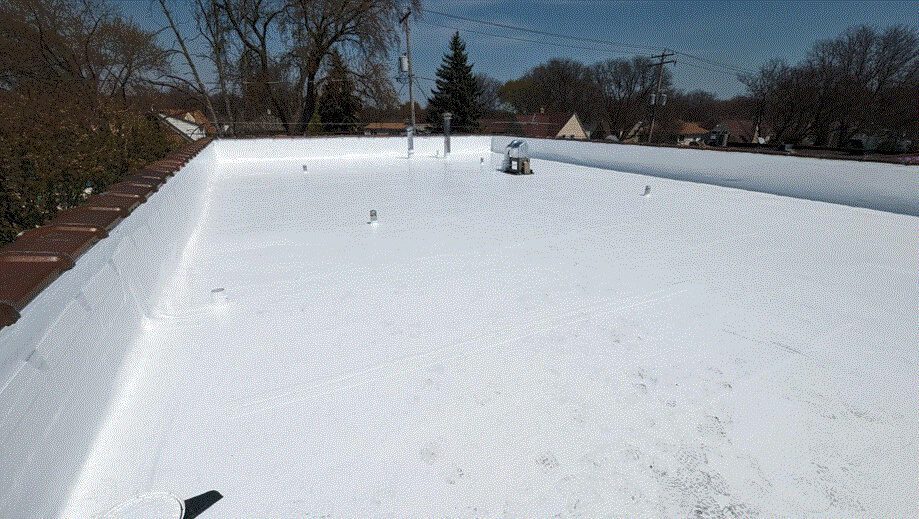
For roofs that are aging but still sound, restoration can be part of the plan. A restoration is a full system: inspection, repairs, surface prep, a seamless fluid-applied coating, and ongoing maintenance. Silicone coatings handle ponding water better than most other coatings, which is why silicone is SBS’s coating of choice on many low-slope roofs. A professionally applied restoration typically adds 10 to 20 years of service life. A coating does not fix poor slope or a damaged deck, though, so drainage problems should be addressed first where possible.
Find out if your roof qualifies for a roof coating. Schedule a free roof inspection, and we’ll tell you honestly whether repair, restoration, or replacement fits your building.
Preventing Future Flat Roof Leaks
Most ponding problems give warning signs long before they cause major damage. A few habits make a big difference:
- Inspect twice a year. Spring inspections show what winter did, and fall inspections help you button up before snow arrives. Add a check after any major storm.
- Keep drains clear. Clear leaves and debris from drains, scuppers, and gutters regularly, especially in fall.
- Track ponding areas. Note where water collects and how long it stays. Changes over time are an early warning.
- Limit rooftop traffic. Service crews can damage membranes around equipment. Walkway pads and post-service checks help.
- Join a maintenance program. Proactive maintenance and timely repairs can extend roof life by 5 to 10 years or more, and they help you avoid emergency calls and surprise interior damage.
When to Call a Professional
A tube of sealant may slow a minor leak for a while, but it is time to call a commercial roofer when you see:
- Water standing on the roof 48 hours or more after rain, or in the same spots after every storm.
- Leaks in more than one area of the building.
- A roof surface that feels soft or spongy.
- Leaks that return in the same place after previous patches.
- Single-ply or multi-layer roofs with a lot of rooftop equipment, where details are complex.
For an active leak, call (262) 354-0872. For everything else, schedule a free roof inspection, or see how we’ve solved similar problems in our case studies.

FAQ: Flat Roof Leak Repair and Ponding Water
How long can water sit on a flat roof before it is a problem?
Water that remains 48 hours or more after rain is generally considered ponding. Puddles that dry within a day are normal on a low-slope roof, but water that lingers for days or returns to the same spots after every storm should be inspected, because it often points to a slope or drainage issue.
How do I fix ponding water on a flat roof?
Ponding is fixed by correcting the cause, usually through slope improvements, drain cleaning or upgrades, or repairs to low spots in the deck. Patching the membrane stops a leak, but it does not stop water from collecting there again.
Can a roof coating fix flat roof leaks caused by ponding water?
A coating alone won’t fix a ponding leak, but it can be part of the solution. Leaks have to be repaired first, and drainage problems should be corrected where possible. On a roof that qualifies, a silicone restoration system handles ponding well and typically adds 10 to 20 years of service life.
Is one ceiling stain a sign of a serious roof leak?
A single stain is not always serious, but it should not be ignored. If it grows, returns after rain, or comes with sagging tiles or musty odors, have the roof inspected, because water may already be in the insulation.
Do I need to close my building for a flat roof leak repair?
Usually not. Most flat roof repairs can be done while the building stays open. We protect the areas below the work and schedule around your tenants and operations.
Why does my flat roof leak in heavy rain but not light rain?
Heavy rain raises water levels on the roof, especially if drains are slow or partly blocked. That higher water reaches seams, flashings, and penetrations that stay dry in light rain. The fix is usually a combination of repairing those details and improving drainage.
Why does my flat roof leak more in late winter?
Late-winter leaks are often caused by snowmelt that can’t drain because drains or scuppers are frozen. The water ponds and finds small gaps that freeze-thaw cycles have opened over the winter. A spring inspection catches this damage before it gets worse.
How do I choose a contractor for flat roof leak repair?
Choose a commercial roofer with manufacturer certifications for your roof system, a clear inspection process, and a willingness to tell you when you don’t need a new roof. Ask how they diagnose drainage problems, not just how they patch leaks, and ask to see local project examples.
Get to the Bottom of Your Flat Roof Leak
Ponding water and repeat leaks are fixable, and most of the time they don’t require a new roof. Schedule a free roof inspection and honest assessment with Seamless Building Systems, and we’ll show you exactly what’s happening on your roof and what it will take to fix it.