Choosing the wrong solution can lead to trapped corrosion and accelerated structural failure.
1. Fluid-Applied Restoration: The "Active" Defense and True Renewal
The fluid-applied restoration approach is not merely a coat of paint; it is a meticulously engineered, multi-step process designed to interact with and stop the degradation of the underlying metal. It focuses on renewal rather than replacement.
- The Rust Factor: A Chemical Solution. Restoration actively and chemically treats corrosion. Before any coating is applied, the metal is thoroughly cleaned and prepared. Specialized rust inhibitive primers are then applied that either chemically convert the red iron oxide (rust) into a stable, black compound (like iron tannate) or encapsulate the oxidation entirely, cutting off its oxygen supply. This is a foundational difference from simply covering up the problem.
- The Process: Creating a Seamless Monolithic Membrane. The core of the restoration process is the reinforcement and encapsulation of the roof’s weakest points.
- Seam and Fastener Reinforcement: All horizontal and vertical seams are treated with specialized high-solids mastics, often reinforced with embedded fabric (meshing). Every single exposed fastener is either tightened, replaced, or individually “capped” with mastic to create a waterproof seal.
- The Seamless Shell: The entire prepared surface is then encased in a seamless (monolithic) elastomeric membrane, applied in multiple coats. This fluid-applied membrane moves with the roof’s natural thermal expansion and contraction, eliminating the need for vulnerable laps and seams inherent to sheet goods.
- Pros: Preservation and Longevity.
- Stops Corrosion: The active treatment process ensures that the clock on rust is reset, not just paused.
- Lightweight: Adding minimal dead load (typically less than 1 lb per square foot), restoration systems do not put undue stress on the existing purlin and structural support system.
- 20-Year Renewable Warranty: A significant long-term benefit is the warranty structure. These systems typically come with a 20-year, non-prorated warranty that is renewable. By simply performing a maintenance cleaning and applying a new topcoat at the end of the term (year 20), the entire warranty can be reset for another 10 to 20 years, offering a predictable, low-cost path to a virtually indefinite roof life.
2. TPO Overlay with Flute Filler: The "Cap" System and Insulative Upgrade
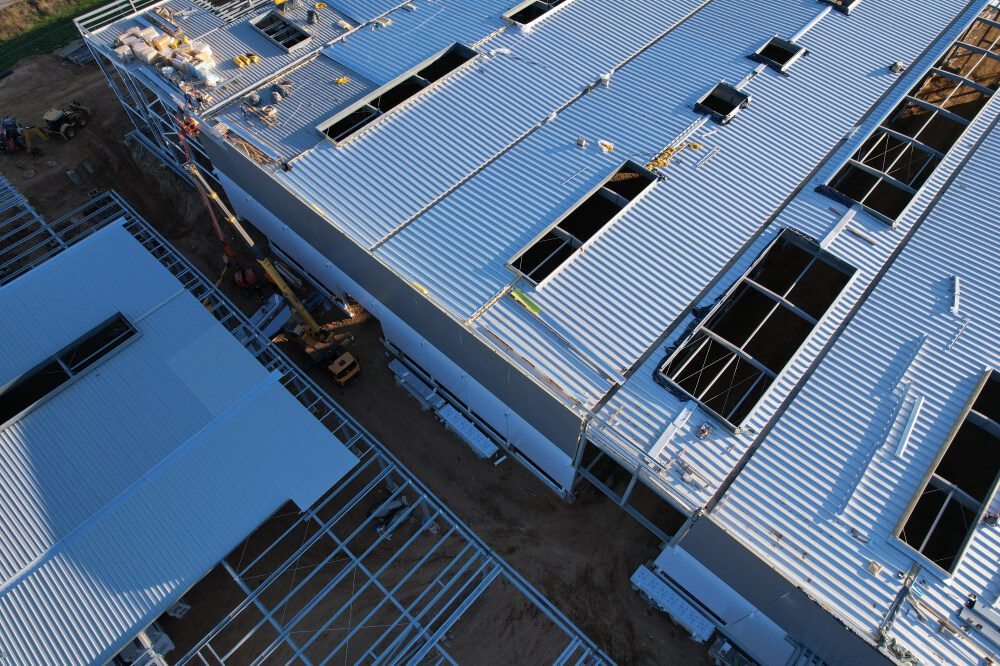
- The Installation Process: To create a flat substrate for the TPO membrane, the low areas (flutes) of the metal panels must first be filled with custom-cut, high-density insulation panels (“flute fillers”). A layer of insulation board is then mechanically fastened across the entire roof deck, followed by the attachment and heat-welding of the TPO membrane itself.
- The Insulation Factor: Massive R-Value Boost. The primary advantage of a TPO overlay is the immediate and substantial increase in the roof’s thermal resistance (R-value). This significantly reduces heating and cooling costs and dramatically reduces interior condensation by raising the temperature of the roof deck’s underside above the dew point.
- The Installation Process: To create a flat substrate for the TPO membrane, the low areas (flutes) of the metal panels must first be filled with custom-cut, high-density insulation panels (“flute fillers”). A layer of insulation board is then mechanically fastened across the entire roof deck, followed by the attachment and heat-welding of the TPO membrane itself.
- Pros: Thermal Barrier and Aesthetics. It provides a superior thermal barrier and offers a clean, modern aesthetic upgrade to the property.
- Cons: Trapped Failure and Weight.
- The “Greenhouse Effect”: TPO is a passive system; it covers, but does not treat, the existing metal roof. Any rust, moisture, or compromised fasteners are sealed beneath the new system. The heat retained between the metal roof and the TPO insulation can create an incubator, or “Greenhouse Effect, ” accelerating the oxidation of the metal underneath without any visible exterior signs until a catastrophic failure occurs.
- Significant Dead Load: The combined weight of the flute fillers, insulation board, and TPO membrane adds substantial “dead load” (often 3-5+ lbs per square foot) to the structure. This added weight must be carefully evaluated by a structural engineer, particularly on older buildings or those with minimal purlin support.
The "Save vs. Scrap" Checklist: A Structural Integrity Assessment
The most responsible and accurate way to determine the best path forward is through a hands-on physical assessment of the existing metal roof’s structural integrity.
| Assessment Factor | Restoration Candidate | TPO Candidate |
|---|---|---|
| 1. The "Hammer Test" for Surface Rust | Rust is limited to orange/re surface oxidation; the metal panel remains rigid, and tapping it produces a solid, resonant sound. The roof is structurally sound, just cosmetically degraded. | Metal flakes, is easily punctured with minor force, or is visibly sagging. Structural integrity is compromised; the metal is too thin to bear the load of a TPO system. |
| 2. Fastener & Seam Integrity | Most existing fasteners are tight, functional, and only require mastic encapsulation. Only a small percentage are loose enough to require removal and replacement/capping. Seams are gapped but still within the reasonable reach of liquid sealant and reinforcement fabric. | Fastener holes are "wallowed out" or enlarged to the point where they cannot hold a seal. Seams are gapped beyond the practical reach of a liquid sealant, indicating excessive movement or panel separation. |
| 3. Interior Insulation Condition (If applicable) | The interior insulation (typically faced fiberglass batting) is dry, intact, and still performing its function. There is no visible sign of active leaks from above. | Interior insulation is wet, sagging, shredded, or water-logged. This indicates a long-term, severe moisture intrusion that must be removed before any system is applied. |
Head-to-Head Comparison: The Final Decision Matrix
| Feature | Fluid-Applied Restoration | TPO Overlay with Flute Filler |
|---|---|---|
| Treatment of Rust | Active: Chemically treats and encapsulates existing corrosion. | Passive: Covers, but often accelerates, corrosion underneath. |
| Weight Added (Dead Load) | Minimal (less than 1 lb/sq ft). Structural approval usually unnecessary. | Significant (3-5+ lbs/sq ft). Requires structural review. |
| Warranty Longevity | 20-year non-prorated, renewable (indefinite service life). | Standard commercial warranty, typically capping at 20 years. |
| Energy Impact | High reflectivity (Cool Roof), moderate R-value. | Excellent R-value boost (best thermal performance). |
| Suitability | Ideal for structurally sound roofs that need corrosion control and leak protection. | Ideal for roofs that are structurally sound but require a major R-value upgrade and full cosmetic change. |